glittergloss2004: (Default)
2026-05-31 04:42 pm

Manfred Bloor character playlist

SPOILER ALERT: This playlist goes through his whole storyline from beginning to end and some of the songs are pretty on the nose. I know the odds of someone with COTRK on their TBR coming across this are pretty low but hey lol
 
I made a playlist of songs that narrate Manfred Bloor's life chronologically. It ranges pretty dramatically from teenage angst about his family's high expectations to his sense of entitlement, god complex, fear of abandonment, self-perception, demise, etc
 
1. Bastille - Blame
Fall upon your knees, sing, "This is my body and soul here"
Crawl and beg and plead, sing, "You've got the power and control"
Don't pin it all on me
 
2. Imagine Dragons - Natural
You're a natural
A beating heart of stone
You gotta be so cold
To make it in this world
Yeah, you're a natural
Living your life cutthroat
You gotta be so cold
Yeah, you're a natural
 
3. MARINA - Guilty
I was just a kid
That you could not forgive
Because it's harder
I was just a kid
And all I really wanted
Was my father
 
4. My Chemical Romance - Mama
She said, "you ain't no son of mine
For what you've done they're
Gonna find a place for you
And just you mind your manners when you go
And when you go don't return to me, my love"
5. REI AMI - Dictator
I am not your queen, I'm your dictator
Bend the fucking knee, yeah bitch that was an order
Whatcha say to me? Huh? Bitch speak louder
You know I reign supreme, nah, you can't imitate her

6. Paramore - Idle Worship
Oh, it's such a long and awful lonely fall
Down from this pedestal that you keep putting me on
What if I fall on my face?
What if I make a mistake?
If it's okay a little grace would be appreciated
 
7. Temposhark - Don't Mess With Me
...all your heads are gonna roll
I've made your misery my goal
So if you want survival, kneel on my arrival
This is how I rule the world
 
8. Sixx: A.M. - This Is Gonna Hurt
Listen up, listen up
There's a devil in the church
Got a bullet in the chamber
And this is gonna hurt
Let it out, let it out
You can scream and you can shout
Keep your secrets in the shadows and you'll be sorry
 
9. Hozier - Arsonist's Lullaby
When I was 16, my senses fooled me
Thought gasoline was on my clothes
I knew that something would always rule me
I knew the scent was mine alone
 
10. The Neighbourhood - Wires
It kills to know that you have been defeated
I see the wires pulling while you're breathing
You knew you had a reason
It killed you like diseases
I can hear it in your voice while your speaking you can't be treated
Mr. Know-it-all had his reign and his fall
At least that's what his brain is telling all
 
11. Crusher-P - Again [Gumi English]
I am on fire
A crying, burning liar
Seeing nothing, nothing, but myself
And I'm the one with the lighter
Every inch of me is charred
God, what happened to my heart?
I'm about to fall apart
Again, again
And you're never coming back
And I'm not okay with that
And I should've never let myself get attached
 
12. Panic! At The Disco - Emperor's New Clothes
Sycophants on velvet sofas
Lavish mansions, vintage wine
I am so much more than royal
Snatch your chain and mace your eyes
If it feels good, tastes good
It must be mine
Heroes always get remembered
But you know legends never die
 
13. Kanye West - Power
No one man should have all that power
The clock's ticking, I just count the hours
Stop tripping, I'm tripping off the power
'Til then, fuck that, the world's ours
 
14. Avenged Sevenfold - Welcome to the Family
Not long ago you find the answers were so crystal clear
Within a day you find yourself living in constant fear
Can you look at yourself now, can you look at yourself?
You can't win this fight
 
15. Candle Queen [Gumi English]
Hurt by the flames that burn higher and higher
Clutching a broken crown of fire
All alone in the final scene
The one and only candle queen
What a pity, that candle queen...
 
glittergloss2004: (Default)
2026-05-27 11:03 am

beauty & femininity project brainstorming & current related readings

The main project I want to do this summer is around hyper femininity and beauty standards. I lean a bit radical in my feminist beliefs but I'm also hyper femme in my style. Even my hair brush is bedazzled. I have 3 lip glosses in my bag at any given time. Two of my biggest fashion inspirations are Ayesha Erotica and 2000s Trisha Paytas. There is a vast chasm between my feelings about hyper-femininity and self-objectification and what I'm actually drawn to and put on my body.

My goal for this project isn't to change myself. I already tried to when I was 19 and first started reading old school feminist literature. It lasted maybe 2 years and that's being generous. However, I do want to turn the criticism of beauty standards inward and reflect on my own practices, where they came from, and how they affect me and other women. I know nothing I do is in a vacuum.  Definitely a little navel gazey but whateverrrr. Not all the written pieces will be about me lol. 

One idea I have for a mini project is to time every beauty practice I do and add it up: makeup, nail polish, whitening strips, hair styling, plucking or shaving around eyebrows, shaving my legs and underarms (very rare)... How much time am I dedicating to this shit? How much do I actually want to do, and how much am I doing because I feel like I have to? 

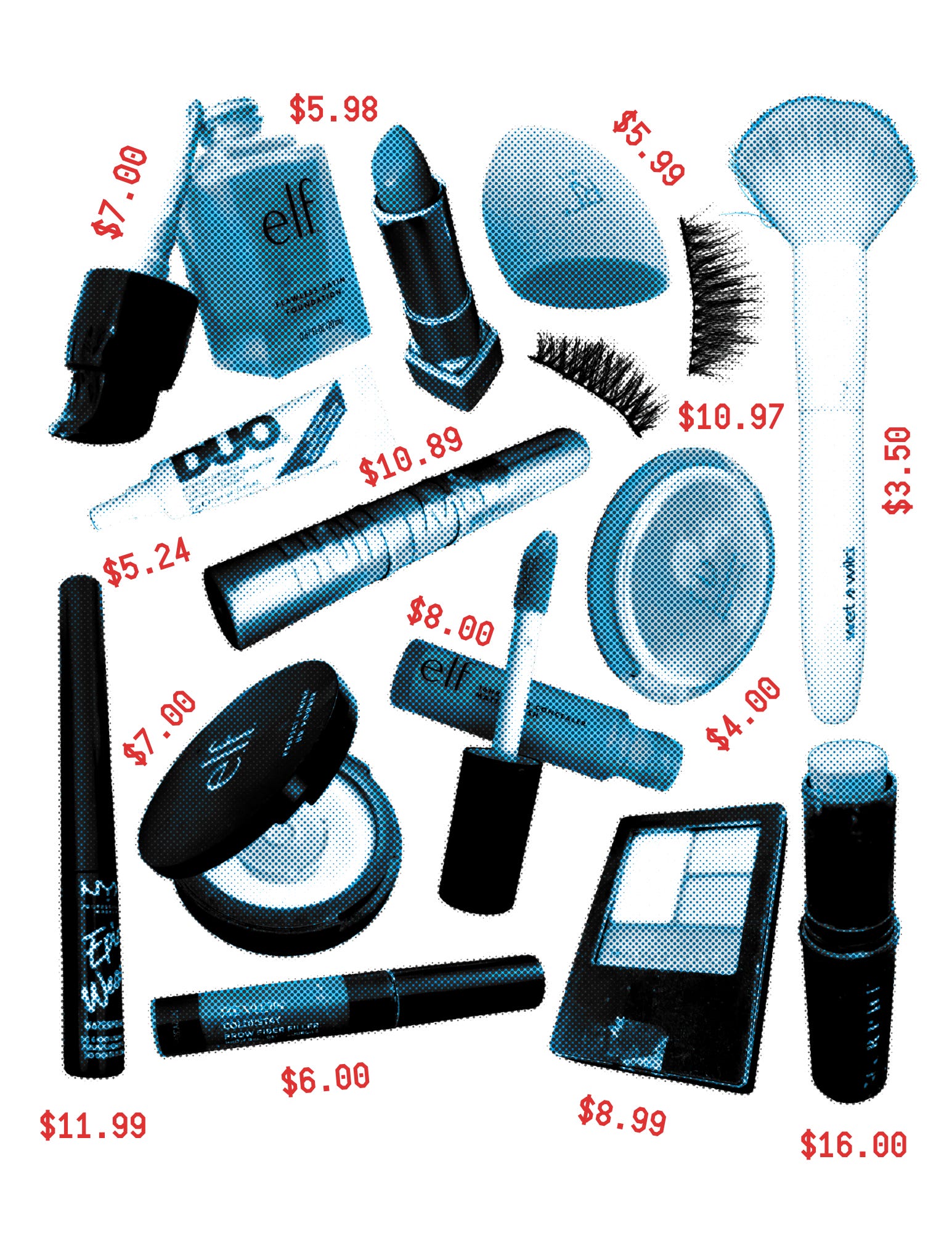
I'm inspired by this art piece "The Price I Pay ($111.55)" by Winnie Lark published in vol.2 issue.2 of Total Woman Victory because it shows in black and white (kind of lol) how expensive it is to conform to gendered beauty standards. You're confronted with numbers you may already know but try to forget as you crumple up the receipt. Stark reminders like this are what make me pause and reflect. 


The first batch of readings I'm working through

Articles:

"How to dress like a feminist: a relational ethics of non-complicity" by Charlotte Knowles & Filipa Melo Lopes

"The problem with rebellious hyper-femininity: an analysis of social media's undermining of hyper-femininity as subversive praxis" by Kayleigh Timmer

Books:
Femininity by Susan Brownmiller

What's Eating Us: Women, Food, and the Epidemic of Body Anxiety by Cole Kazdin

TBR (as of right now. I'm going to be on the lookout for more sources all summer)
The Beauty Myth: How Images of Beauty Are Used Against Women by Naomi Wolff 

Female Chauvinist Pigs: Women and the Rise of Raunch Culture by Ariel Levy
 
 
glittergloss2004: (Default)
2026-05-25 10:56 am

Disability in the Children of the Red King

Writing an academic paper about my lifelong special interest felt genuinely incredible. That was so much fun.


Disability in the Children of the Red King


Disability has been used to signal characters’ internal evil and corruption in genres such as gothic literature and horror films (Liyana E and Aravind 36). Such themes are illustrated vividly in Jenny Nimmo’s children’s fantasy series The Children of the Red King. The myths and narrative devices such as isolation, kill-or-cure, disability as punishment, and narrative

prosthesis. The myths are most visible in the two main villains, Ezekiel and Manfred Bloor.

Part I: The Bloor’s Crippled Legacy

Ezekiel Bloor is the main villain in the Children of the Red King book series by Jenny Nimmo. He is a 100 year old mad, failed sorcerer and the patriarch of the Bloor family. He owns Bloor's Academy, a private boarding school for students gifted in the arts or who are endowed (Nimmo Midnight). Ezekiel uses Bloor's Academy to control magically gifted youth called the endowed and exploits their abilities to cling to his fortune and power. In the Children of the Red King universe, endowments are magical abilities that appear in descendants of the Red King, a medieval African king (Nimmo Midnight). Ezekiel’s great-grandson and the heir to the Bloor regime Manfred Bloor inherited the power of hypnotism which he uses to squash threats to his family's power (Nimmo Midnight). Endowments might also be interpreted as a metaphor for disability, but Ezekiel's paraplegia and Manfred's facial disfigurement and limp are the only explicit representations of disability in the series.

The first 5 books in the Children of the Red King series work up to the protagonist Charlie Bone finding and waking his father from a decade long hypnosis orchestrated by the Bloors. Just when Manfred thinks he’s successfully foiled Charlie’s rescue plan, three ancient, magical leopards called the Flames materialize from a swirling cloud of leaves to chase him away and maul him (Nimmo Hidden 440). Manfred becoming disabled and scarred from this attack perpetuates the trope of disability as punishment or karma for evil acts (Liyana E and Aravind 36). This trope is also seen in his great-grandfather becoming paralyzed from the waist down before the series, which also occurred as cosmic punishment for evildoing.

Nimmo’s characterization of disability in this family pulls heavily from the concept of degeneration, a theory from the 19th century that proposed a bloodline could devolve and die out rapidly due to a parents’ actions or immorality (Hurley 66). Madness is passed down from their oldest ancestor Borlath who was a sadistic tyrant (Nimmo Shadow vi).. Ezekiel is a mad scientist who ruins and ends lives in order to cling to the deed his own grandfather stole and avenge his ancestor, Borlath(Nimmo Beast 30). Manfred is as evil and mad as Ezekiel, which results in him becoming physically crippled and scarred (Nimmo Shadow 439). The way the Bloor family has become more disabled and more mad through generations is a poignant representation of degeneration used as a plot device.

Ezekiel and Manfred perish in the final book when a dog nudges Ezekiel’s wheelchair down a flight of stairs where he and the chair land on Manfred (Nimmo Red). The end of their storyline reinforces kill-or-cure myth, which appears in narratives when a disabled character either dies or their disability is cured before the story concludes (Dolmage 31). Using a character’s mobility aid to kill the only two disabled characters in the series is an example of narrative prosthesis. Every aspect of their disabilities have been tools to move the protagonist’s story forward from beginning to end without including realistic and humanizing representations of disabled people’s lived experience (Mitchell & Snyder).

In the article “Disabilities and Extraordinary Abilities in Science Fiction”, Callus & Grech name Sand Dan Glokta from the fantasy novel The Blade Itself as an example of a disabled villain whose disabilities are realistically woven into his everyday life, from dressing himself to using staircases. In contrast, Nimmo describes Ezekiel and Manfred Bloor’s disabilities voyeuristically. Readers aren’t granted access to their interior lives and experiences. The closest readers get to an inside look at his recovery experience is through his father’s voice when Dr. Bloor says, “They lacerated his throat. Every word he utters causes him pain” (Nimmo Beast 26).

Manfred’s bedroom is located at the top of a tower and Ezekiel’s laboratory is in the attic. How they manage going up and down the stairs is not explained. Bloor’s Academy is a very old building devoid of elevators and full of long, winding staircases. There has never been a wheelchair lift mentioned when characters climb the stairs to his room in the attic (Nimmo Midnight 264).

Facial differences have been used as narrative prostheses in literature and horror films across the globe for generations. The reveal of a villain’s scarred, disfigured faces is a common tool in horror cinema to frighten and disgust viewers as well as signal a character’s criminality (E and Aravind 37). Visible disability and bodily deterioration are also frequently used in Gothic literature to represent inner corruption and evil (Hurley). In Charlie Bone and the Beast, the reveal of Manfred’s facial mutilation is deployed as a narrative prosthesis to shock and disgust readers. It also plays into the bitter cripple trope, since Ezekiel promises to get even with the Bones for ‘ruining’ his great-grandson (Nimmo Beast 27)

“For the first time since the visitors arrived, the figure in the shadows turned his face to the light….. Four great scars ran from the youth's hairline to his chin. His eyelids were puckered with stitches, and his top lip dragged upward in two places, giving the face a permanent grimace (Nimmo Beast 26).”

The ‘magical cure’ trope emerges when Manfred’s face is restored by enchanted bugs (Dolmage). He also has a superhuman recovery, going from being unable to speak due to a lacerated throat to magically speaking clearly and without pain once the scars on his face are repaired (Raanam). Manfred is forced to hide his scarred face during recovery, even sneaking around Bloor’s Academy with a mask and cloak on before his face was restored (Nimmo Beast 76). Manfred’s exclusion until his face was restored reinforces the belief that people with facial differences must be ‘fixed’ before being accepted by society and even viewed as human.

In the article “Naming the Trope: A Deep Dive into the Harmful Uses of Disability Stereotypes in the American Theatre”, Ben Raanan describes the ‘magical freak’ trope as a using disabled characters as entities to propel the abled protagonist’s plot, but are stripped of humanity themselves. This is reflected in the language Nimmo uses for Manfred and Ezekiel. In one scene Ezekiel is described as an “ancient creature in a wheelchair (Nimmo Beast 23). Manfred’s crippled form limping down the hallway is described as an “it” even after he’s been identified (Nimmo Beast 353) . Manfred was not called an “it” before he was maimed. Visibly disabled characters are repeatedly dehumanized through the language Nimmo chooses for describing them and their bodies.

Part II: Ancestral Magic as a Metaphor for Disability

Endowments are hereditary, determined by which of Red King’s children they are descended from. There are often multiple generations between an endowed child’s birth (Nimmo Midnight ix) It is not clear if Jenny Nimmo intended for endowments to represent disabilities but when the series is read with that lens, themes such as isolation, ableism in education, and disability visibility impacting how different disabled people are treated emerge.

Paton Yewbeam is a power booster, which means he causes surges of electricity that brighten and burst lightbulbs (Nimmo Midnight 41). Paton has always had shaky control over his power, making him introverted and nocturnal as an adult. He only takes walks at night , when people can’t see him and more importantly can’t see his endowment in action, which could be interpreted as the myth of disability as isolating (Dolmage). When Charlie Bone follows his Uncle Paton on the man’s nightly walk and discovers his uncle’s endowment, Paton says, “Pathetic, isn’t it? I ask you, what use is it? I wish you hadn’t seen (Nimmo Midnight 41).” Paton’s lifelong ostracization due to uncontrollably bursting lights is reminiscent of the ostracization of people who have literal outbursts due to conditions like tourettes or autism. Paton also talks about people running when he showed them his power as a kid (Nimmo Midnight 43)

Bloor’s Academy is a prestigious boarding school where the majority of students are “normal” unendowed students who are gifted in the arts, but it also serves endowed students. There are approximately 10-12 endowed students at a time and they do their homework in a separate room from the unendowed students. Their homework room is so far away from where the other students do their homework that Billy, who helps Charlie find the Red King’s Room on Charlie’s first day of school, remarks that not many people know where the room is (Nimmo Midnight 178). It is as if the endowed students are hidden away where their powers won’t disrupt the regular students’ studies, like they frequently disrupt homework in the King’s Room when they lose control over their powers or start fighting with each other (Nimmo Midnight 49). Through a disability lens, their separation from unendowed students could be interpreted as the myth of disability as isolation (Dolmage). Like Paton hiding from most of society during the daytime, and Ezekiel Bloor spending most of his time hidden away in the attic. The disabled are hidden out of sight.

Endowments exist within a social hierarchy at Bloor’s Academy based on how powerful, or able the student appears.Some endowments are seen as useless or pitiable, like Paton’s power boosting and Gabriel’s psychometry (Nimmo Midnight 41). Gabriel Silk displays debilitating anxiety related to his endowment. When he puts on an item of clothing previously owned by someone else, he experiences their memories (Nimmo Midnight 186). Perhaps Gabriel’s endowment would be less debilitating if his family was wealthy, but his family is too poor to buy him new clothes. This causes him distress throughout the day and other characters see him as gloomy and a bit pathetic (Nimmo Midnight).

Bloor’s Academy is a prestigious school that recruits endowed students, but when a student’s endowment interferes with their learning they do not accommodate the students unique needs. Gabriel has to rely on Charlie to trade clothes with him instead of receiving assistance from a school that certainly has the money to spare a new uniform (Nimmo Midnight). The closest thing to accommodation they are granted is a separate room to study but as stated earlier, this others and isolates them, similarly to how schools sometimes separate disabled students even when their disability doesn’t interfere with their learning.

Meanwhile, Dagbert is praised because his endowment is deadly, but the praise is contingent on his abilities being used the right way (Nimmo Beast 26). Despite their value as tools, the endowed are never granted the same respect non-endowed do. One day when magical shenanigans were out of control in the academy, Dr. Bloor summons every endowed student including his son to his office and berates them, going so far as to call the endowed freaks (Nimmo Invisible). This reveals the headmaster’s true feelings about the endowed, that they are disruptive freaks who should only be tolerated if they suppress the chaotic nature of their magic or if they are being weaponized against the Bloors’ enemies. This is similar to how Margaret Price describes universities tolerating eccentric tenured professors but not students who display the same behaviors (“Listening to the Subject of Mental Disability”). Differences are tolerated in fiction and reality based on the individual's social standing and utility to the institution they are part of.

Charlie Bone likely has a learning disability, as evidenced by his consistent inability to focus in class or during homework hour. The villains’ disabilities are highly visible. This reinforces the gothic theme of visible disabilities as a reflection of the inner self and one’s character (Hurley) as it positions someone who is able to pass as non-disabled as morally superior to a person described as having a “bent and twisted” damaged body (Nimmo Beast 42). The way endowments are treated in Bloor's Academy reflects ableism seen in real academic settings, through the unequal treatment based on ability, isolation of students deemed unruly, and inaccessibility.

Children of the Red King frames disability as isolating, disruptive, as external evidence of internal evil through explicit disability and magical powers that parallel disabled people’s experiences. The Bloor family’s storyline utilizes tropes and literary devices such as characters becoming disabled as punishment for evil, kill-or-cure, and narrative prosthesis. Reading the series through a critical disability lens reveals how deeply centuries old and modern stigma of disability is embedded in fiction.


Works Cited

Callus, Anne-Marie, and Victor Grech. "Disabilities and Extraordinary Abilities in Science Fiction." Foundation 50.140 (2021): 18-31. ProQuest. Web. 16 May 2026.


Dolmage, Jay Timothy.  “INTERCHAPTER: An Archive and Anatomy of Disability Myths.”  Disability Rhetoric, Syracuse University Press, 2014, p. 31. 


E, Liyana, and Aju Aravind. “Disability as Fear Factor: Stereotyping of Disability in Malayalam Horror Cinema.” Journal of Film & Video, vol. 77, no. 2, June 2025, 183628575, pp. 36–48. EBSCOhost, https://doi.org/10.5406/19346018.77.2.04.


Hurley, Kelly. “Entropic Bodies.” The Gothic Body, Cambridge University Press, 1996, pp. 65–88, https://doi.org/10.1017/CBO9780511519161.005 


Mitchell, David T., and Sharon L. Snyder. Narrative Prosthesis : Disability and the Dependencies of Discourse. University of Michigan Press, 2000.

Nimmo, Jenny. Charlie Bone and the Beast. Orchard Books, 2007

Charlie Bone and the Hidden King. Orchard Books, 2006.

Charlie Bone and the Invisible Boy. Orchard Books, 2004.

Charlie Bone and the Red Knight. Orchard Books, 2010.

Charlie Bone and the Shadow. Orchard Books, 2008.

Midnight for Charlie Bone. Orchard Books, 2002.

“Listening to the Subject of Mental Disability.” Mad at School: Rhetorics of Mental Disability and Academic Life, by Margaret Price, University of Michigan Press, 2011. Accessed 16 May 2026.


Raanan, Ben. “Naming the Trope: A Deep Dive into the Harmful Uses of Disability Stereotypes in the American Theatre.” Howlround Theatre Commons, 3 January 2022, https://howlround.com/naming-trope-deep-dive-harmful-uses-disability-stereotypes-american-theatre.


glittergloss2004: (Default)
2026-05-25 10:36 am

Book thoughts: ch 1&2 of "What's Eating Us"

(((((content warning: discussion of body weight, body image, disordered eating)))). I'm new to writing content warnings outside of tumblr tags so I welcome feedback. Body image and weight will continue to come up as I explore the topics of femininity and beauty standards through a feminist lens this summer but I'm going to avoid using explicit numbers as much as possible. I know it's a common trigger and frankly I don't find them useful anyways.
I've been reading What's Eating Us: Women, Food, and the Epidemic of Body Anxiety by Cole Kazdin and I want to share my thoughts so far and some facts I learned. I feel like I'm grading myself as I write this and I'm trying so hard to release myself from that right now. This isn't for my professors this is for me What's Eating Us: Women, Food and the Epidemic of Body Anxiety (chapters 1 & 2) First, some facts I'd like to highlight (p.5):
  • Teenage girls from low-income families are 153% more likely to be bulimic than girls from wealthy families!
  • Women with physical disabilities are more likely to develop eating disorders than able-bodied women
  • Transgender young adults are more likely to develop eating disorders than cisgender young adults
Kazdin suggests that stress from constant surveillance of our figures and food choices may be more detrimental to our health than occasionally consuming food with less nutritionally rich foods with people who you love. Stress is a killer. I do not want to be 70 years old stressed about my figure. I do not want to celebrate cancer making me skinny like my grandmother does. It breaks my heart to see women and gender expansive people carry body shame for their entire lives. Earlier this year, my grandmother lost track of how many dogs she had at the time but she recognizes that she is thin and that thin = good. Thin is something she's strived for her entire life. The obsession with weight is drilled into our brains so aggressively that dementia may take away the name of your pet dog and leave the belief that thin = beautiful = good. Maybe I should be happy for her that she's finally happy with her body weight, but its painful to watch someone I love celebrate the deterioration of her body.

By age 65, women who are healthy and overweight tend to live longer than women who are a "normal-weight" and healthy, however the normal-weight women tend to have more healthy years.1 But being thin isn't a guarantee of health. If we are fortunate enough to make it to old age, we will all become disabled. When researchers say women of "normal-weights" have more healthy years, are we factoring in disordered eating? If we consider mental health as important as or inseparable from physical health, who is actually healthier? Who is happier? I'm not sure, but I do know that my healthiest, happiest vision of myself in old age is a woman who learned to love herself completely in her natural state. I've floated back and forth along the spectrum of a little overweight to obese since I was about 8. I'm built like my grandmother was before cancer and I came to the realization a few years ago that without medical intervention or serious illness I will probably never be the weight recommended for my height and I'm okay with that.

You are deserving of love, confidence, and comfort in your body right now.


1. Diehr, Paula et al. “Weight, mortality, years of healthy life, and active life expectancy in older adults.” Journal of the American Geriatrics Society vol. 56,1 (2008): 76-83. doi:10.1111/j.1532-5415.2007.01500.x